Known for its rich historical and cultural heritage, the town of Puy-en-Velay is also the birthplace of a unique gastronomic treasure: the Green Lentil of Puy-en-Velay AOP. Cultivated for more than two millennia, Puy-en-Velay AOP Green Lentil is much more than just a food. It is a symbol of the history and culture of the region.
The History of the Green Lentil of Puy-en-Velay AOP
Its origin dates back to Gallo-Roman times and its fame has spread over the centuries, thanks to its unique taste and its exceptional nutritional qualities. In France and more particularly in Auvergne Rhône-Alpes, the lens has been present since Roman times. Archaeological excavations carried out in Saint Paulien have uncovered a Roman amphora containing seeds of different species including lentils.

A treasure to protect
The reputation of Puy Green Lentil quickly attracted many traders to the department, making Haute-Loire a crossroads for dried vegetables.
However, some traders did not hesitate to import lentils from Germany or Russia, before reshipping them with the name Puy.
This misuse of the name of the town of Puy-en-Velay then pushed the industry to act. Thus, in 1935, a trial recognized Lentille Verte du Puy as an Appellation of Origin within the meaning of the 1919 law.
This verdict rendered by the Puy Civil Court marked the start of a long journey aimed at protecting and promoting our green vellav pearl.
The Cultivation of Green Lentils from Puy-en-Velay AOP
The cultivation of Puy-en-Velay AOP Green Lentils is a true art. Local farmers, heirs of ancestral know-how, cultivate this legume with passion and respect for the environment. The volcanic soils of the region, combined with a cool and humid climate, provide ideal conditions for its cultivation.

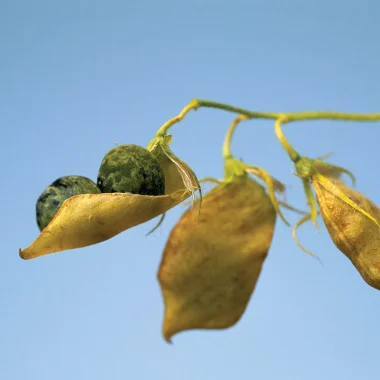
The lentil is a plant species belonging to the legume family. In the Haute-Loire region, the variety Lens Esculenta Puyensis is cultivated , named by the Russian botanist Helena Barulinda after the city of Le Puy-en-Velay, long renowned for lentil cultivation. Following a selection process, INRA (the French National Institute for Agricultural Research) chose a particularly promising line, named ANICIA after the ancient Roman city of Le Puy-en-Velay. The lentil is an annual plant that grows to between 20 and 30 cm tall. Its fruits are pods, generally containing two seeds. The characteristic color of the Puy Green Lentil (AOP) is pale green with bluish marbling.
The harvest of Puy-en-Velay AOP Green Lentils is a key moment of the year. It takes place between July and September and requires special attention. The lentils are harvested when ripe, then dried and carefully sorted to guarantee optimal quality.
A Gastronomic Treasure
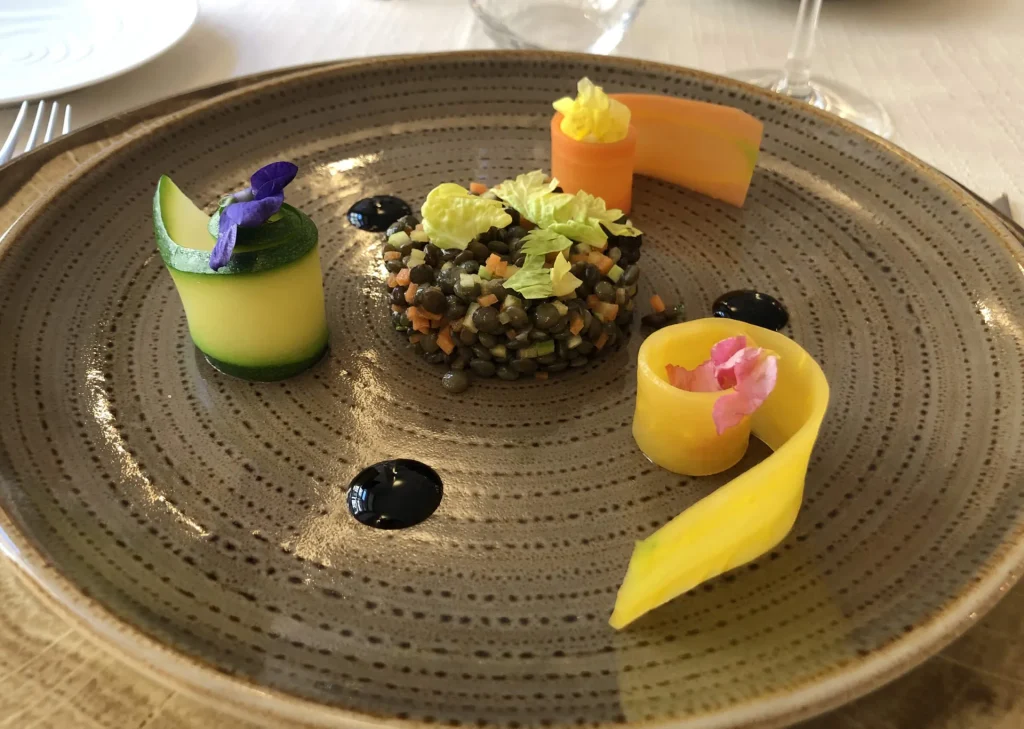
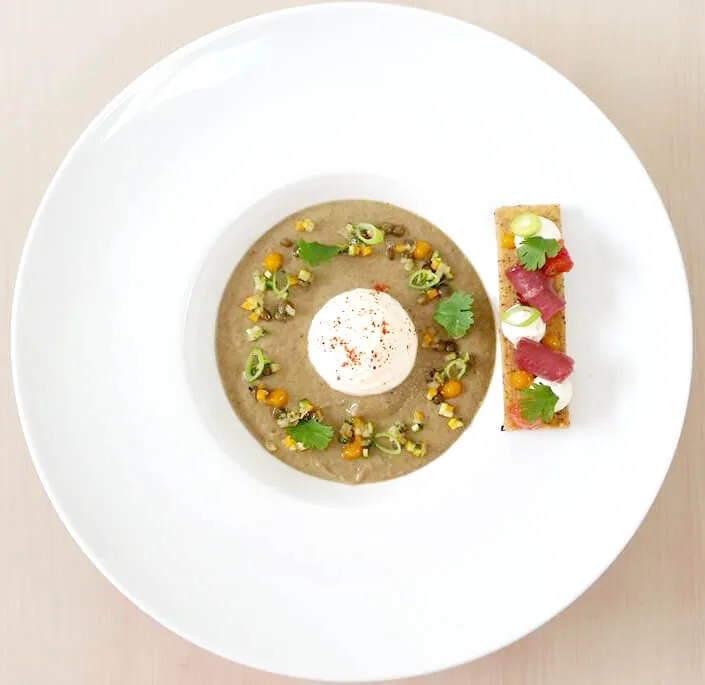
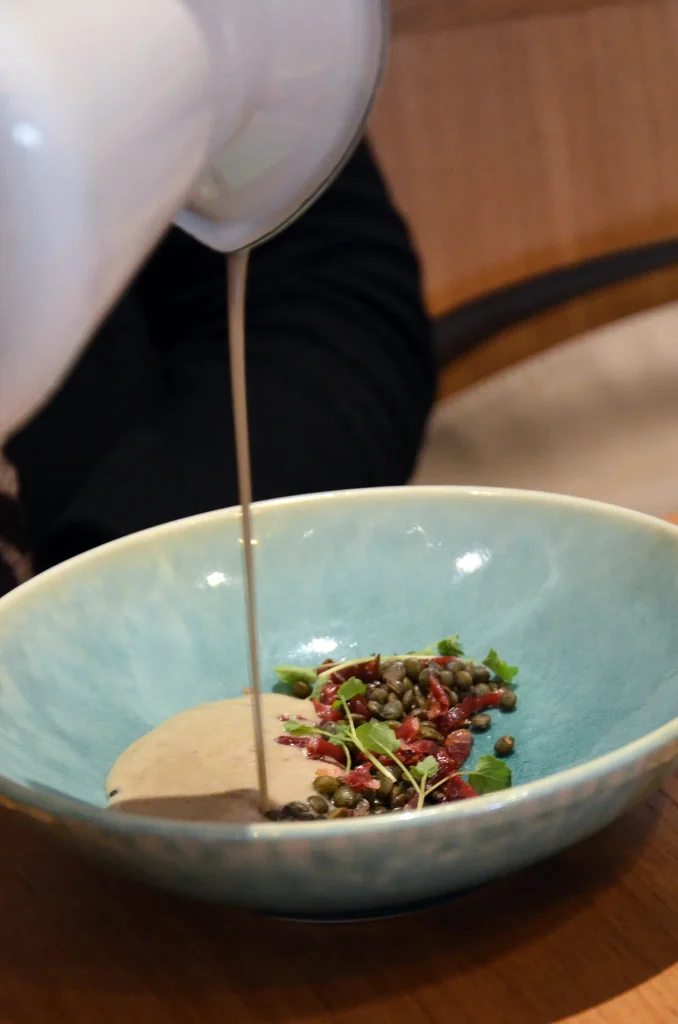
The Puy-en-Velay AOP Green Lentil is a key ingredient in local gastronomy. Its delicate flavor and melting texture make it an ideal accompaniment to many dishes. Whether in salad, as an accompaniment to meat or fish, or in a soup, it brings a touch of refinement and authenticity to each recipe.
To cook them properly, you need to know two things :
- No pre-soaking is necessary
- Avoid salting the cooking water as this hardens the lentils and extends the cooking time.
To cook your lentils: put them in a large volume of cold unsalted water
Add a bouquet garni, onion, herbs to your liking
Allow 20 minutes of cooking time from boiling
Add salt at the end of cooking at your convenience
Drain and accompany as you wish!
A PDO of extraordinary nutritional richness
The Protected Designation of Origin (PDO) of Puy-en-Velay Green Lentil is a guarantee of quality and authenticity. It guarantees that the lentils are grown, harvested and packaged according to traditional methods, in a defined geographical area, thus respecting strict specifications.
In addition to its taste qualities, Puy-en-Velay AOP Green Lentil is also renowned for its nutritional benefits. Rich in protein, fiber and minerals, it is a health food par excellence. Its regular consumption contributes to a balanced and varied diet.
savor